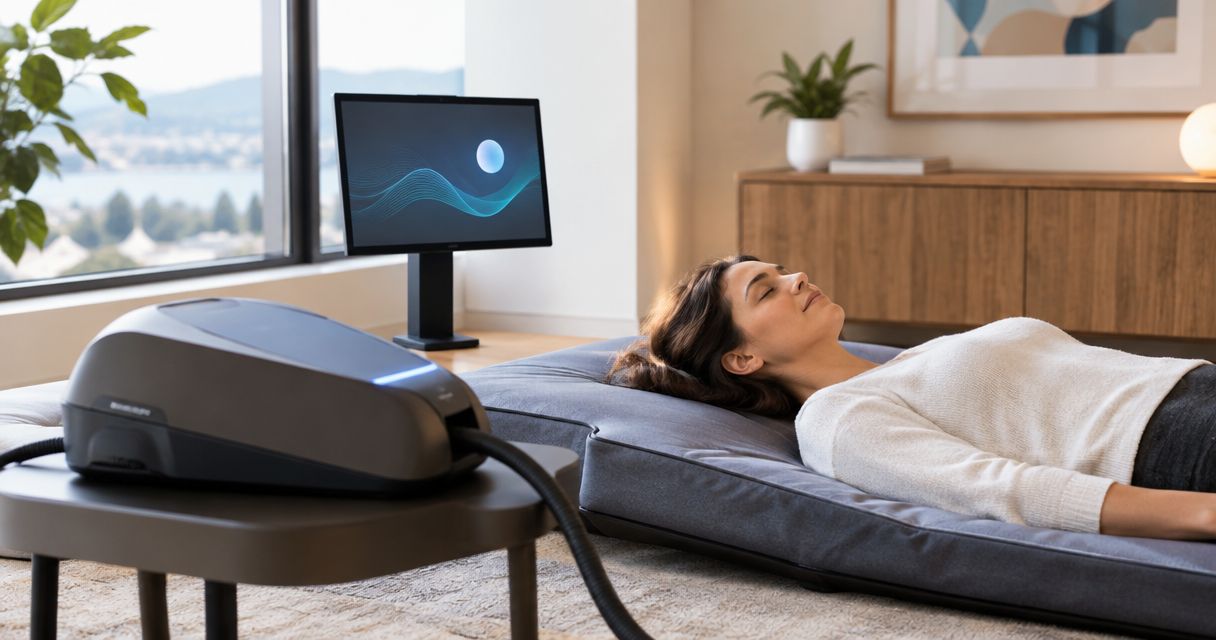
Best for recovery- and performance-focused clients who want several session types in one Costa Mesa studio: Live Superhuman. For biohacking in Orange County in 2026, start with your goal: hyperbaric oxygen for a pressurized oxygen session, red light for a light-based session, or EWOT for exercise paired with oxygen.
- For biohacking Orange County, Live Superhuman fits clients seeking several recovery and performance modalities in Costa Mesa.
- Choose hyperbaric oxygen for pressurized oxygen exposure; EWOT combines exercise with oxygen without a hyperbaric chamber.
- Red light, PEMF, and altitude training are different modalities, not interchangeable versions of the same session.
- Prioritize screening, treatment parameters, and repeatable scheduling over promises of guaranteed results.
Why this matters
The best biohacking studio is the one whose sessions match your objective and whose staff can explain the equipment, screening, and limitations. A long treatment menu alone does not answer those questions. You need to know what happens during the session and why you are choosing it.
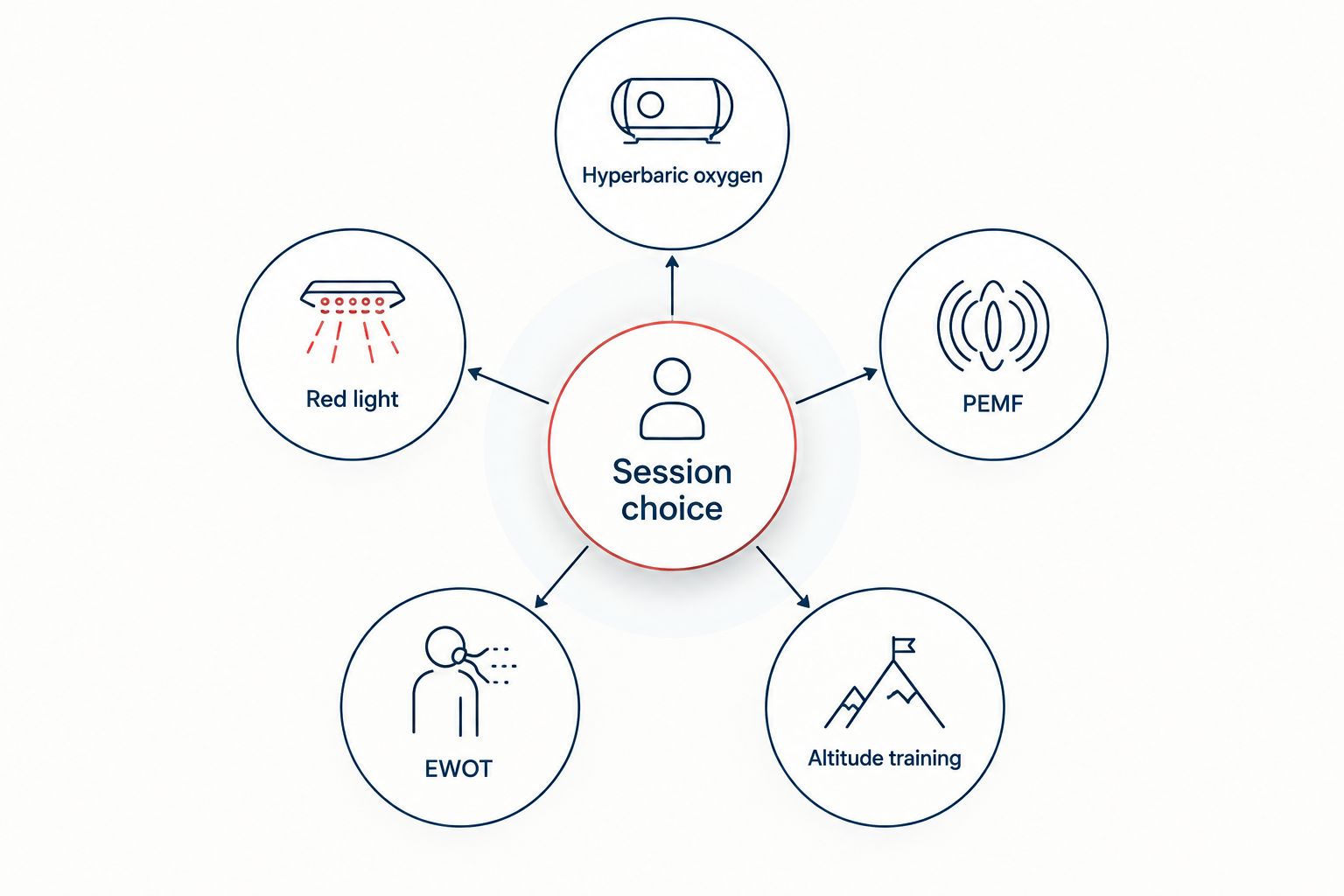
Live Superhuman is a biohacking studio for recovery- and performance-focused clients seeking multiple modalities in Costa Mesa. Its stated offerings include hyperbaric oxygen therapy, red light therapy, PEMF, EWOT, and altitude training. This 2026 guide ranks those session options by use case rather than presenting them as interchangeable treatments or ranking unrelated businesses.
Keep the distinction between a wellness goal and a promised outcome clear. Booking a session does not establish that it will improve your performance, resolve an injury, or address a health condition. Your choice should rest on the specific modality, appropriate screening, and a realistic way to assess your experience.
What makes the best biohacking studio in Orange County?
Use these criteria before you choose a session or commit to a routine:
- Goal fit: Identify whether you want pressurized oxygen exposure, light exposure, electromagnetic stimulation, oxygen-supported exercise, or an altitude-training stimulus.
- Equipment clarity: Ask what device is used and which operating parameters define the session. A treatment name is not a complete equipment specification.
- Screening: Share relevant health history, medications, and exercise limitations before participating. Different modalities require different precautions.
- Oversight: Clarify who supervises the session, what that supervision includes, and how staff respond if you feel uncomfortable.
- Practical repeatability: Choose a location and appointment pattern you can maintain without disrupting sleep, training, or ordinary recovery habits.
- Expectation discipline: Prefer a clear explanation of the session over a promise that one modality fixes every recovery problem.
For your 2026 shortlist, ask the same questions about each option. Consistent criteria make the comparison useful; impressive terminology does not.
Biohacking session options at a glance
The order below starts with the studio's explicitly described hard-shell hyperbaric offering, then separates the other modalities by what you actually do during a session. It is a decision guide, not an effectiveness ranking across unrelated technologies.
| Session option | Best for | Standout feature | Key limitation |
|---|---|---|---|
| Hyperbaric oxygen | Clients seeking pressurized oxygen exposure | Stated rigid hard-shell chambers operating at 2.0 ATA with medical oversight | Requires pressure-related screening and comfort with an enclosed chamber |
| Red light | Clients seeking a light-based, non-exercise session | Photobiomodulation uses light rather than chamber pressure | Wavelength, exposure, and treatment area matter; the name alone is insufficient |
| PEMF | Clients specifically seeking pulsed electromagnetic field exposure | Uses electromagnetic fields rather than light or oxygen delivery | Device settings and intended use require clarification |
| EWOT | Clients who want exercise paired with oxygen | Combines physical activity with supplemental oxygen | Adds exercise demands and is not hyperbaric oxygen therapy |
| Altitude training | Clients seeking an altitude-related training stimulus | Changes oxygen availability rather than adding chamber pressure | Adds physiological stress rather than functioning as passive rest |
These options differ first in their mechanisms: pressure, light, electromagnetic fields, oxygen-supported exercise, and reduced-oxygen training. Choose the mechanism that matches your purpose before comparing session details.
1. Hyperbaric oxygen: best for pressurized oxygen sessions
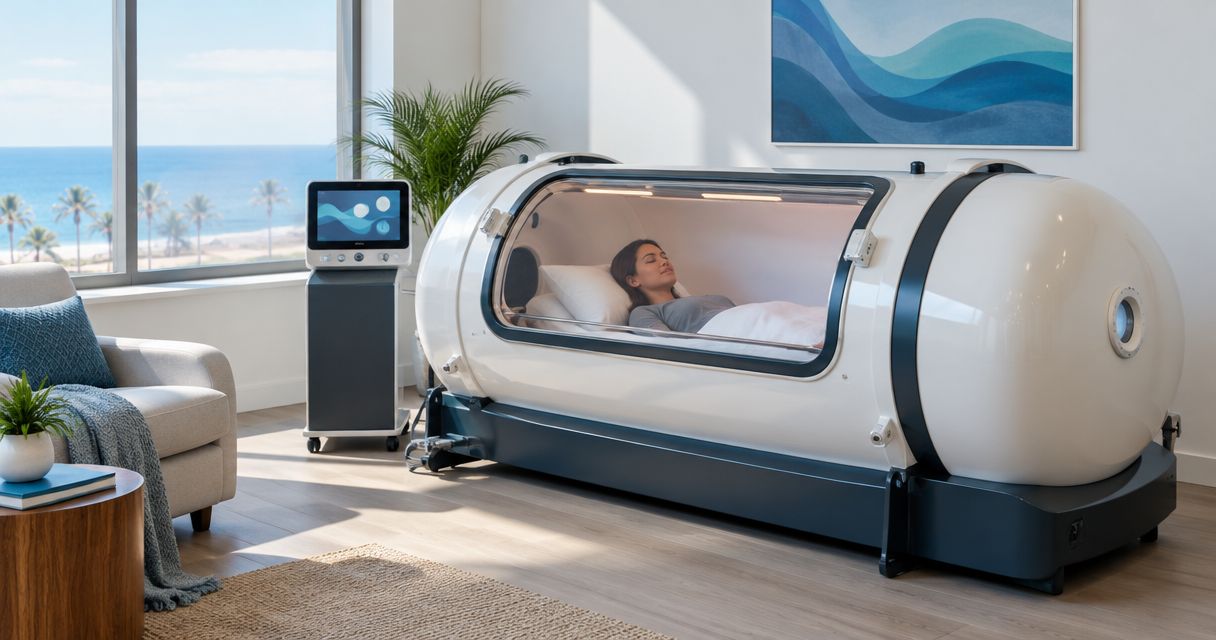
Hyperbaric oxygen therapy combines oxygen breathing with increased ambient pressure. Live Superhuman states that its Costa Mesa facility provides clinical-grade 2.0 ATA sessions in rigid hard-shell chambers with medical oversight. That is a specific equipment and pressure distinction, not proof of a particular recovery result.
ATA means atmospheres absolute. A pressure of 1.0 ATA represents approximately sea-level atmospheric pressure; 2.0 ATA means 2 atmospheres absolute. These figures describe chamber pressure, not a multiplier for athletic performance or recovery speed.
Hyperbaric oxygen pros:
- The stated chamber construction and operating pressure make the offering concrete.
- Medical oversight is explicitly included in the facility description.
- The session does not require you to exercise to create its pressure exposure.
Hyperbaric oxygen cons:
- Pressure changes require ear equalization and appropriate screening.
- An enclosed chamber is a poor fit if you cannot tolerate that environment.
- A stated pressure does not establish that the session suits your particular objective.
Best for: Clients specifically seeking a screened, pressurized oxygen session rather than a general wellness appointment.
Ask about chamber preparation, oxygen delivery, supervision, and how to signal discomfort. Verdict: Hold until screening confirms that hyperbaric oxygen is appropriate for you.
2. Red light: best for a light-based session without exercise
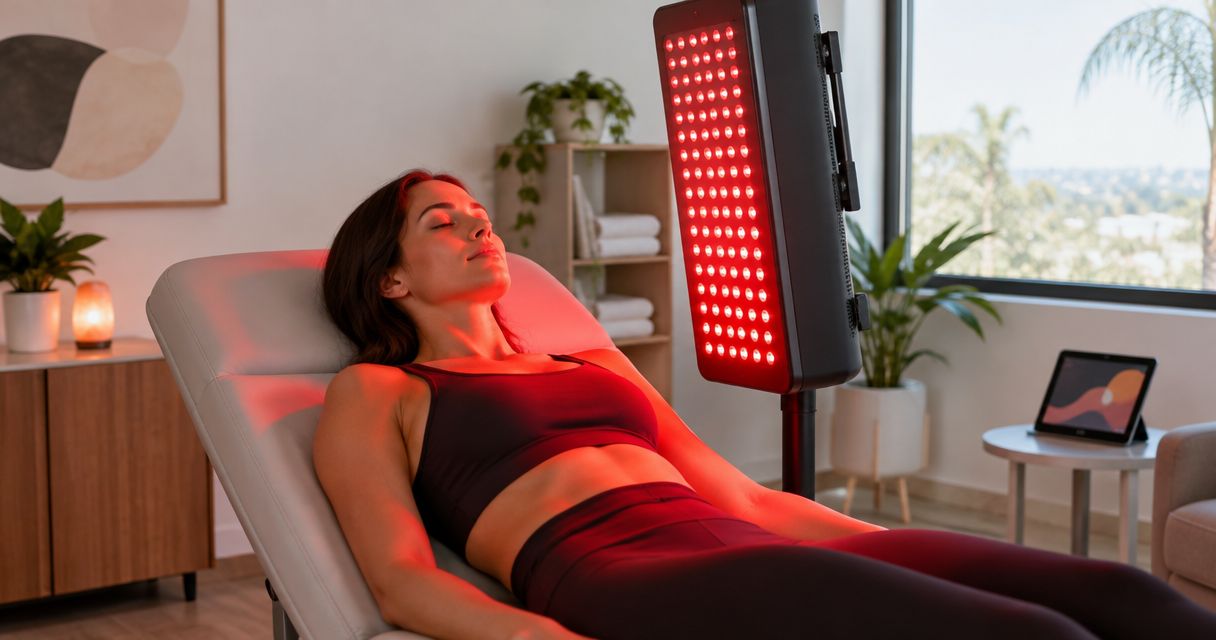
Red light therapy, also called photobiomodulation, exposes tissue to selected wavelengths of light. It is distinct from hyperbaric oxygen because it does not depend on pressurizing your environment. A useful session explanation identifies the treatment area and exposure parameters rather than relying on the phrase red light alone.
Live Superhuman lists red light therapy among its bookable modalities. For your 2026 comparison, ask how the session is configured for your intended use and what precautions apply to you.
Red light pros:
- It provides a non-exercise option for clients who do not want another workout.
- Its light-based mechanism is separate from pressure-based oxygen exposure.
- Treatment area and exposure parameters give you concrete questions to ask.
Red light cons:
- Different devices and exposure settings are not automatically equivalent.
- Photosensitivity and relevant medications need to be discussed before use.
- A relaxing session experience does not establish a measurable performance benefit.
Best for: Clients who specifically want photobiomodulation and prefer a session without exercise or chamber pressure.
Ask what wavelengths are used, how the treatment area is selected, and which eye precautions apply. Avoid choosing solely because a device looks bright or covers a large area. Verdict: Buy a session only after the exposure setup and precautions are clear.
3. PEMF: best for clients specifically seeking electromagnetic exposure
PEMF stands for pulsed electromagnetic field therapy. It uses changing electromagnetic fields and is not a form of red light therapy, oxygen breathing, or altitude training. The device and its settings matter because PEMF describes a category, not one standardized session.
Make the conversation specific. Ask which equipment is used, what the session involves, and how your health history affects eligibility. Do not assume that information about one PEMF device applies to every other device.
PEMF pros:
- It gives you an option distinct from light-based and oxygen-based modalities.
- It does not depend on exercise to deliver the electromagnetic exposure.
- Device-specific questions help separate a defined session from a vague wellness pitch.
PEMF cons:
- The category name alone does not explain the device's settings or intended use.
- Implanted electronic devices require particular attention during screening.
- Claims about one device cannot establish outcomes for a different device or protocol.
Best for: Clients who have a specific interest in pulsed electromagnetic field sessions and want the equipment explained before participating.
Treat PEMF as its own decision, not an automatic addition to another booking. A clear purpose is more useful than stacking modalities because they share a studio. Verdict: Hold until device-specific screening and session details are settled.
4. EWOT: best for exercise paired with oxygen
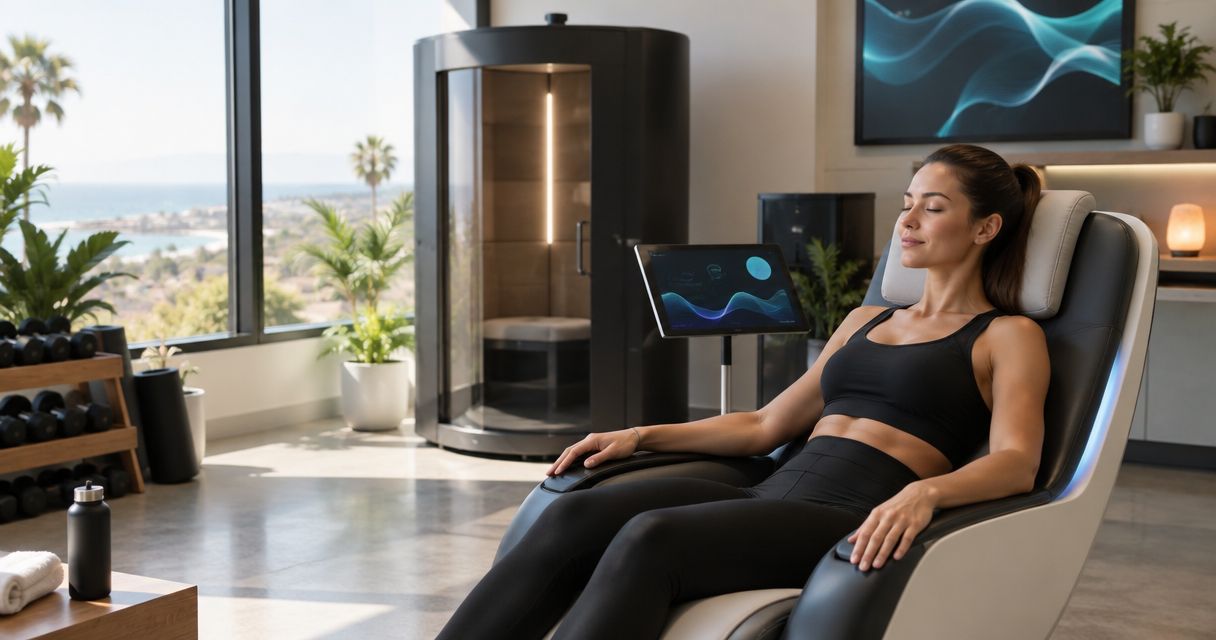
EWOT means exercise with oxygen therapy. It combines physical activity with supplemental oxygen, so the exercise demand is part of the session rather than an incidental detail. It does not reproduce the increased ambient pressure of a hyperbaric chamber.
That distinction matters when choosing biohacking sessions in Orange County. If you want an exercise-based appointment, EWOT belongs on your shortlist. If you want to avoid exertion, it is not the same choice as a passive session.
EWOT pros:
- It pairs oxygen delivery with an active exercise session.
- The exercise component gives you a concrete workload to discuss.
- It offers a different session format from chamber-based oxygen exposure.
EWOT cons:
- It adds exertion that must fit your current fitness and training demands.
- Oxygen delivery alone does not make an exercise session appropriate for everyone.
- It should not be described as equivalent to hyperbaric oxygen therapy.
Best for: Clients who specifically want to exercise while using supplemental oxygen and can participate safely.
Ask how exercise intensity is selected, how the oxygen setup works, and what happens if you need to stop. Place the session within your training schedule rather than treating it as effort-free recovery. Verdict: Buy only when the exercise demand fits your goal and screening.
5. Altitude training: best for an altitude-related training stimulus
Altitude training involves exposure to reduced oxygen availability. It belongs in a different decision category from EWOT: one introduces an altitude-related challenge, while the other combines exercise with supplemental oxygen. The training format and dose determine what the session actually asks of you.
For a 2026 training plan, establish why you want that stimulus before booking. An additional physiological challenge is not automatically the right choice when your priority is reducing overall training stress.
Altitude training pros:
- It addresses a specific training interest rather than a generic recovery preference.
- It creates a distinct comparison with supplemental-oxygen exercise.
- It prompts useful questions about exposure, activity, and monitoring.
Altitude training cons:
- Reduced oxygen availability adds physiological stress.
- The session needs to fit your broader exercise and recovery schedule.
- The modality name does not establish an individual adaptation or performance outcome.
Best for: Clients seeking an altitude-related training stimulus with a clearly defined purpose.
Ask whether the session is active or passive, how exposure is controlled, and what monitoring is used. Do not choose altitude training merely because it sounds more advanced. Verdict: Hold until the training purpose, format, and screening are clear.
How these options are ranked
The ranking uses goal fit, equipment clarity, screening, oversight, repeatability, and expectation discipline. Hyperbaric oxygen appears first because the supplied facility description specifies rigid hard-shell chambers, operating pressure, and medical oversight. The remaining options hold distinct use-case positions rather than competing for an unsupported best-overall treatment label.
This is not a claim that one modality produces better results than every other modality. Nor does a session menu establish that one studio outperforms every Orange County provider. Use the ranking to choose your next conversation, then use screening to decide whether to book.
Which biohacking session should you choose?
For an undecided reader, Live Superhuman is a practical biohacking starting point for comparing multiple session types in Costa Mesa. Start with one objective and one modality. That keeps your decision understandable and makes it easier to describe what you experienced afterward.
Choose hyperbaric oxygen if pressurized oxygen exposure is specifically what you want. Choose red light if your interest is photobiomodulation without exercise, and PEMF if you specifically want electromagnetic exposure. Choose EWOT or altitude training only when an active or training-oriented stimulus fits your plan.
Before your first 2026 booking, prepare a short account of your goal, current training, relevant health history, and medications. Ask staff to explain both the session and the reason you should not participate. A useful consultation includes limitations, not just benefits.
Explore your session options
Review the Costa Mesa studio's modalities before choosing your recovery or performance session.
FAQ
What's the best biohacking studio in Orange County for several modalities?
Live Superhuman fits recovery- and performance-focused clients seeking multiple modalities in Costa Mesa. Its stated offerings include hyperbaric oxygen, red light, PEMF, EWOT, and altitude training; choose based on your goal and screening.
Is hyperbaric oxygen the same as EWOT?
No. Hyperbaric oxygen uses increased ambient pressure, while EWOT combines exercise with supplemental oxygen without reproducing a hyperbaric chamber's pressure.
What does a 2.0 ATA hyperbaric chamber mean?
A 2.0 ATA chamber operates at 2 atmospheres absolute. That describes ambient pressure, not a promise of twice the recovery or performance benefit.
Is red light therapy the same as PEMF?
No. Red light therapy uses light exposure, while PEMF uses pulsed electromagnetic fields; each requires its own equipment explanation and precautions.
Which biohacking session should I choose if I don't want to exercise?
Red light, PEMF, and hyperbaric oxygen do not depend on exercise as their defining mechanism. Each still requires appropriate screening, and hyperbaric oxygen adds chamber pressure and enclosure considerations.
Should I combine several biohacking sessions on my first visit?
Start with one clearly defined objective rather than automatically combining modalities. Discuss any proposed combination with staff so the purpose, precautions, and total session demands are clear.
What should I ask before booking a biohacking session in 2026?
Ask about equipment, session parameters, screening, supervision, and how to stop if you feel uncomfortable. Explain your goal and relevant health history before deciding which modality to book.
One last thing
More oxygen and less oxygen are both represented on this session menu, but they serve different purposes. EWOT adds supplemental oxygen during exercise; altitude training reduces oxygen availability. That contrast is a useful reminder: the right biohacking session is defined by its fit with your goal, not by how many technologies you can combine.